

Starting a business can feel exciting, overwhelming, and everything in between. You might have a great idea or a strong desire to build something on your own — but turning that ambition into a successful company takes more than just motivation. It requires a grounded understanding of what building a business actually looks like from the inside out.
In this guide, we break down the core mindset shifts, real-world challenges, and essential startup terminology that every aspiring founder should know. Whether you’re just exploring the idea of starting a business or already in the early stages, this two-part series will help you navigate the road ahead with more clarity and confidence — minus the fluff and false promises.
Part One: 15 Brutal Truths You Must Know Before Starting a Business

Starting a business is a dream for many—but it’s not the right fit for everyone. While entrepreneurship can be incredibly rewarding, it also demands resilience, clarity, and more sacrifice than most anticipate. Many rush in with excitement, only to be blindsided by the reality behind the scenes.
If you’re considering starting a business, this guide will help you align your expectations with the real world. It’s not about discouraging you—it’s about giving you the unfiltered truth so you can build smarter, faster, and stronger.
Here are 15 things you need to know before you start a business.
1. Talk Is Cheap—Execution Is Everything
Saying you want to start a business means very little if there’s no action to back it up. For every 60 people who talk about launching a company, only one actually follows through. Ideas are easy. Action is rare.
If you’re serious about starting a business, don’t wait for the perfect moment—it rarely comes. The world doesn’t reward intention. It rewards execution.
2. Ideas Alone Have No Value
A brilliant idea means nothing until it produces results. In fact, ideas are everywhere—most people have several. The real differentiator is execution. A mediocre idea with great execution often beats a fantastic idea poorly implemented.
If you want honest feedback on your business idea, ask someone to invest in it. You’ll quickly discover who actually believes in it.
3. No One Will Care as Much as You Do
As the founder, your level of commitment will always be unmatched. Even partners and early employees won’t feel the same intensity or ownership you do. That’s not a flaw in them—it’s the nature of the role you’ve chosen.
Whether you go solo or build a founding team, understand this: you’ll be the one staying up late, pushing through obstacles, and carrying the vision forward.
4. You Don’t Need a Lot of Money to Start
One of the biggest misconceptions about starting a business is that you need significant capital upfront. You don’t.
Most successful businesses begin with minimal resources. In the early stages, your time is your most valuable asset. If you can’t turn time into revenue, money won’t solve your problem—it’ll only delay the inevitable.
Bootstrapping forces creativity and clarity. It teaches you how to build lean and smart from day one.
5. Sacrifice Is Non-Negotiable
Many people leave their jobs to escape the 9-to-5 grind, only to find themselves working 16-hour days for their own company. The trade-off? Total ownership—and a chance at building something meaningful.
When you’re starting a business, it becomes your top priority. That often means less time with friends and family, less sleep, and far more stress. Success doesn’t come without cost.
6. Build a Smart Foundation from the Start
Your business must be structurally sound if you want to scale. Smart businesses check a few critical boxes:
- They have no obvious growth ceiling
- They’re built around systems that can be delegated
- They can scale as demand increases
- Everyone involved understands the end goal
Without these in place, scaling becomes difficult—or even impossible.
7. Don’t Become an Employee in Your Own Business
When starting a business, it’s common to wear every hat. But at some point, you need to shift from doing the work to building the systems that do the work.
Your goal should be to identify your strengths and delegate the rest. Employees are meant to free up your time so you can steer the ship—not stay stuck below deck doing everything yourself.
Focus on strategy and growth. Let your team run the day-to-day.
8. Fail Fast, Adapt Faster
Things rarely go as planned. You’ll make mistakes. The key is to learn quickly and pivot with purpose.
Failure isn’t falling short of a goal—it’s quitting altogether. Think of each setback as data. What can it teach you? How can you adjust?
The business world rewards those who can adapt in real time. Companies that once dominated—like Nokia—fell not because they failed, but because they failed to evolve.
9. Resource Management Is Everything
Starting a business is like playing a strategy game. You have limited resources: time, energy, relationships, and maybe a bit of money. How you manage those resources determines how far you go.
Don’t waste time wishing you had more. Use what you’ve got and get creative. Some of the most successful entrepreneurs started with less than you think.
10. The Right Mentor Saves You Years
If you can find someone who’s already walked the path, consider yourself lucky. A great mentor can prevent costly mistakes, provide clarity, and fast-track your growth.
Study people you admire. Read their stories, analyze their moves, and absorb everything you can. If one of them is willing to guide you, treat their time like gold.
Mentorship isn’t magic—but it’s close.
11. There Are No Shortcuts That Actually Work
Trying to find the easy way out? Don’t. Building something meaningful takes time. Real value comes from consistent, intentional work—not hacks or loopholes.
Shortcuts often lead to setbacks. Focus on the long game. Learn the fundamentals, apply them, and keep showing up.
12. Discipline Will Make or Break You
You control your output. And when you’re building a business, your discipline becomes your most important asset.
Success isn’t about one lucky move—it’s about consistent action over time. That means waking up and working even when you don’t feel like it. Especially when you don’t feel like it.
Celebrate small wins—but don’t lose sight of the bigger picture.
13. Sales Solve Almost Everything
No matter what industry you’re in, sales are the engine that powers your business. It doesn’t matter how beautiful your branding is if nobody’s buying.
Revenue gives you options. Need to hire? Get more sales. Need better tools? Get more sales. Most business problems can be traced back to one thing: not enough income.
When starting a business, make generating revenue your top priority.
14. Don’t Rush to Raise Capital
Many entrepreneurs celebrate fundraising as a badge of honor. But in reality, raising money early often means giving away a large portion of your business before you’ve even proven your model.
Try to build your business organically first. Once you’ve maxed out what you can do alone, then—and only then—consider outside funding.
Bootstrapping isn’t just about saving equity. It’s about proving you can create value from scratch.
15. Know Your End Game
Why are you doing this? What’s the goal? Is your business a stepping stone, a legacy, or something you plan to sell?
Knowing the end game gives your business direction. It helps you make smarter decisions, align your team, and track your progress more clearly.
If you’re starting a business without a destination, you’re just wandering. Define the mission—and let every decision support that goal.
Bonus: Legal and Financial Structure Can Come Later
Many first-time founders stress about business registration, trademarks, or accounting from day one. These things matter—but they shouldn’t stop you from getting started.
Your focus should be on testing your idea and earning your first customer. Once you’ve got traction, the legal and financial systems will follow naturally.
Final Thoughts
Starting a business is one of the most challenging—and potentially rewarding—journeys you can take. It demands clarity, grit, and a willingness to grow through discomfort. But if you’re serious, strategic, and persistent, it’s also one of the most powerful ways to build a life on your own terms.
Part Two: Essential Startup Lingo for Starting a Business
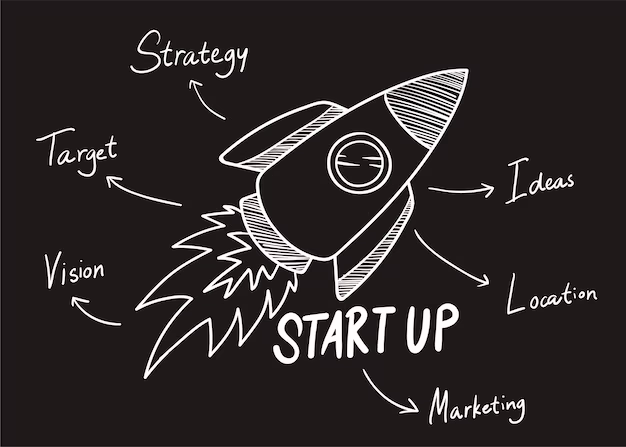
If you’re serious about starting a business, it’s not just about building the right product or finding a great idea. It’s also about understanding the language of startups — the key concepts, financial terms, and operational metrics that guide how successful founders think and act.
In this second part of our guide to starting a business, we break down the terminology that often gets thrown around in startup circles. Whether you’re raising funding, bootstrapping, or just building your MVP, mastering this vocabulary will give you a major advantage.
Let’s dive in.
1. MVP (Minimum Viable Product)
When starting a business, one of the first buzzwords you’ll hear is MVP — short for Minimum Viable Product. But don’t let the simplicity fool you.
The critical word here is viable. An MVP isn’t just a bare-bones prototype. It needs to be functional enough to serve a real purpose for early users. If no one can actually use it or benefit from it, then it’s not viable.
When building your MVP, your goal is to test your assumptions and solve at least one problem in a meaningful way. That’s what sets real businesses apart from half-baked ideas.
2. Venture Capital and Angel Investors
At some point, many founders consider raising money to grow faster. That’s where venture capital and angel investors come in.
- Venture Capital (VC) involves institutional investors who take high risks by investing in early-stage startups. They usually expect big returns from a few winning companies in their portfolio.
- Angel Investors are individuals (often entrepreneurs themselves) who write smaller checks using their own money — usually at the very early stage of a company.
If you’re starting a business, understand that funding isn’t guaranteed. Venture capital comes with high expectations and trade-offs, including giving up equity and control.
3. Profitability vs. Burn Rate
Profitability seems simple: you make more than you spend. But in startup terms, when and how you reach profitability matters.
Early on, many startups focus on growth over profit, but it’s important to know your burn rate — the amount of money your company is losing each month. If you’re burning $100,000 per month and not paying attention, you could run out of money quickly.
Founders who are serious about starting a business must watch their burn rate like a hawk. It’s not about how much you raise — it’s about how long your company can survive with what you have.
4. Seed Round and Funding Stages
When raising money, startups often go through stages — Seed, Series A, Series B, and so on.
- A Seed Round is usually the first meaningful round of funding. It could be $300,000 or $3 million, depending on the startup.
- In later rounds (Series A, B, C), investors often take board seats and aim for significant ownership, like 20%.
Each round should serve a clear purpose. If you’re starting a business, don’t raise money just because others are doing it. Raise when you’ve hit a ceiling with your current resources — not before.
5. Product-Market Fit (PMF)
Product-Market Fit is when you’ve built something that people really want — and your biggest problem becomes keeping up with demand, not finding customers.
Before PMF, your job is to experiment, test, and learn. After PMF, your job shifts to growth and scaling.
Many founders who are starting a business focus too much on branding or fundraising without reaching PMF. Don’t make that mistake. Finding PMF should be your obsession in the early days.
6. Bootstrapping
Not every business needs venture capital. In fact, many of the most sustainable companies were built through bootstrapping — using personal savings or early revenue to grow.
If you’re starting a business in a niche or one with modest growth goals (say, $5M–$10M/year), bootstrapping might be a better path. It gives you full control and keeps your focus on profitability, not pitching investors.
7. Convertible Notes, SAFEs, and Equity
When you do raise money, you’ll come across terms like:
- Convertible Note: A loan that can convert into equity later, usually with interest or repayment terms.
- SAFE (Simple Agreement for Future Equity): A simpler and founder-friendly agreement created by Y Combinator. It allows early investment without setting a valuation right away.
- Equity: Ownership in your company. This can be granted directly or through stock options, which give employees the right to purchase shares in the future.
If you’re starting a business, understand what you’re signing. Always read the fine print — every deal comes with long-term consequences.
8. TAM (Total Addressable Market)
TAM stands for Total Addressable Market, or the full revenue potential if every possible customer bought your product.
While no company captures 100% of their TAM, it’s still an important tool to understand the scale of opportunity. A huge TAM can attract investors, but more importantly, it helps you decide whether your business idea is worth pursuing.
Great products often expand the TAM by creating demand that didn’t exist before — think of Uber or Tesla.
9. Valuation and IPO
- Valuation is the price investors agree your startup is worth, often based on your last funding round.
- But remember: valuations in private markets don’t mean much until someone actually buys the company or it goes public.
That’s where an IPO (Initial Public Offering) comes in. Going public allows a startup to sell shares to the public, giving founders, employees, and investors a way to cash out.
While an IPO is not the goal for every founder starting a business, it’s often seen as a major milestone of financial maturity.
10. ARR and MRR
If your business runs on subscriptions, you’ll often hear:
- ARR (Annual Recurring Revenue): Revenue from yearly contracts or subscriptions.
- MRR (Monthly Recurring Revenue): Monthly subscription income.
Recurring revenue is valuable because it’s predictable and scalable. If you’re starting a business, especially a SaaS product, tracking ARR or MRR will help you measure growth and plan ahead.
Final Thoughts
The journey of starting a business doesn’t end once you register your company or ship your product. That’s just the beginning.
Understanding the language of startups — from MVPs to ARR — equips you with the tools to make smarter decisions, attract the right partners, and build a company that lasts. If you want to build something meaningful, don’t just build. Learn. Interpret. Apply.
Conclusion
If you’re serious about starting a business, don’t just focus on the idea — focus on how to make it work. Building something from the ground up takes more than hustle. It demands patience, adaptability, financial literacy, and the ability to understand the language that real businesses run on.
From finding product-market fit and tracking your burn rate to understanding what it really means to raise capital or stay profitable — these are the fundamentals that set successful founders apart. Take the time to learn them, apply them, and refine your approach as you grow.
No matter where you are in your journey, remember: starting a business is less about one perfect move and more about consistently showing up, learning fast, and building smart.
Enjoyed this guide on starting a business?
Subscribe for more no-fluff insights, real-world tips, and resources to help you launch and grow with confidence



1 Comment